
It’s me, back in your inbox!
I was going to say, “It’s Monday!” But I’m guessing you don’t need me to remind you. You’re aware the week starts today. 🙂
What I do hope is this little blast of inspo gets it rolling in the right direction.
Let’s talk about failure. Not the big failures the world gets to see, that’s a whole other email, but the internal failures that keep eating away at you. Those are the ones that chip away at your confidence and self-worth.
I’m talking about the habits you keep trying to break but can’t. We all have them. Biting your nails, midnight snacking, swearing, gossiping… scrolling through your phone at 2 a.m. wondering if that dog video was really worth 12 minutes of your life (it was, but still…).
And you’re doomed to repeat the cycle. Because, ya ain’t special. (I mean, I think you are, but science says otherwise)
Unless you understand how habits actually work, no amount of willpower or good intentions will set you free from them.
If you’ve been reading my Mind Shift Monday emails for a while, you’ll know everything I teach comes down to one thing, making your brain work in your favor, not against you.
Science time…
92% of people fail to break a bad habit. But why?
Your brain is a creature of habit. It craves routine.
The more you repeat a behavior, the more it becomes ingrained in your brain’s neural pathways. Think of these pathways like well-worn trails in a forest. Every time you choose the same habit, you walk that same trail, making it easier and faster to follow the next time.
Research shows that about 40% to 45% of your daily actions aren’t even conscious decisions. They’re habits your brain puts on autopilot to conserve energy.
Your brain loves this efficiency. Change, on the other hand, requires an expenditure of energy. Your brain isn’t a fan of using more energy than it needs to. We’ll chalk this up to evolution when we were in constant fight or flight mode. Eat, or be eaten.
This is why your brain keeps you on that same trail, making it feel impossible to break free. But if you’re sick of the same old scenery, you need to know what it takes to break a habit, once and for all.
You’ve heard the 21-day rule, right? Do something for 21 days and it’s a new habit. Sorry, that’s not true. New studies show that it takes 66 to 254 days to engrain a new, let’s call it a forest path. That’s how long your brain is going to take to realize that YOU are not the problem and to stop trying to course-correct you.
Your brain is constantly trying to protect you, even if it doesn’t feel like that. So, make friends with your brain! (Did I just come up with my new book title?)
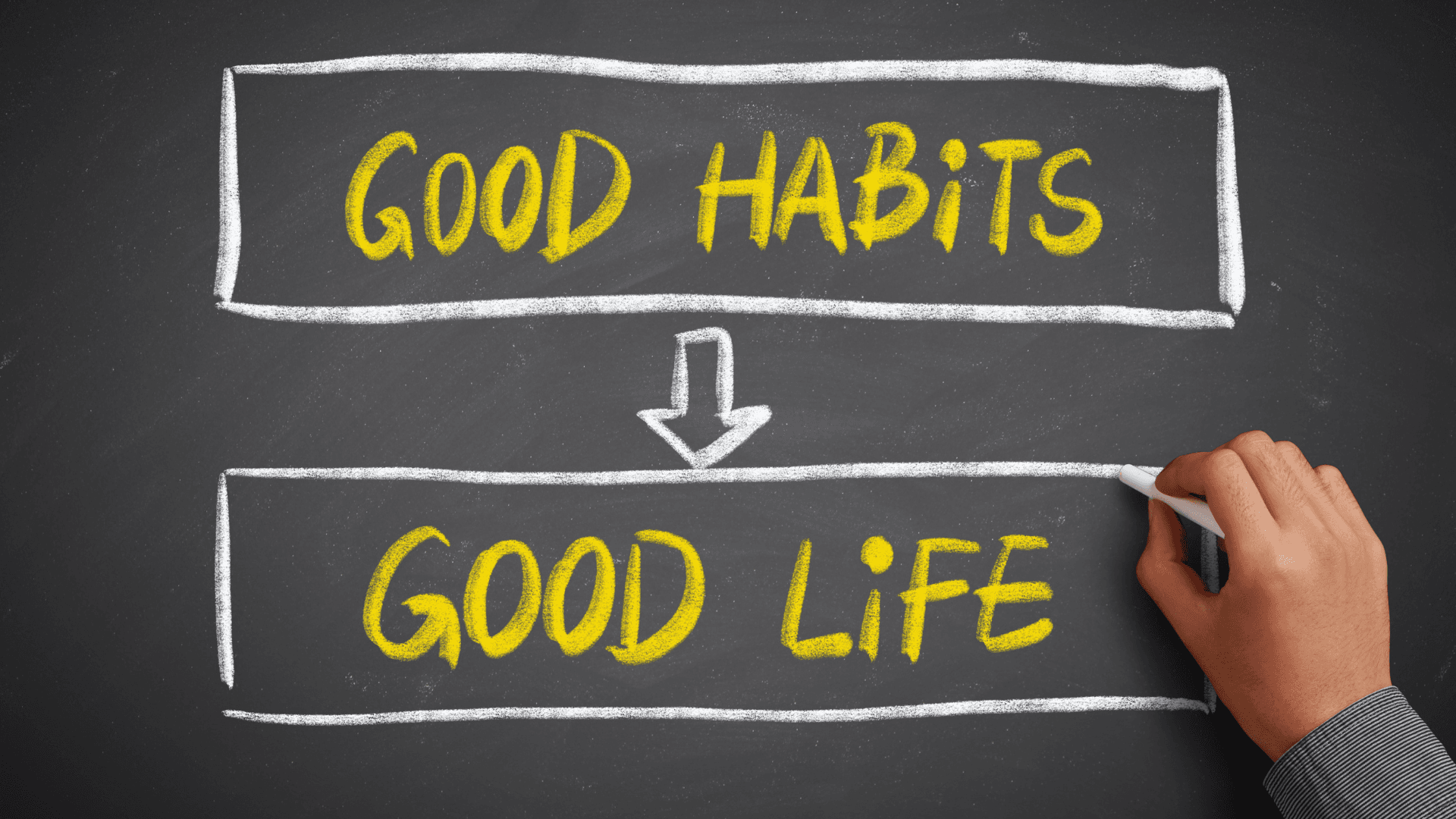
Here’s how to work with your brain to break habits that are keeping you from being the full person you want to be…
Identify the Trigger: Pinpoint the exact moment when your habit starts. Is it a time of day, an emotion, or a particular situation? Awareness is the first step to change. Next time you’re feeling overwhelmed in a situation and you feel yourself reaching for Youtube to disconnect, pause and think about what that dopamine hit is really solving.
Replace the Routine: You can’t just stop the habit cold turkey. Swap the old behavior with a new one that serves you better. Instead of reaching for junk food, grab a glass of water or go for a walk. Of course, it’s not going to feel as satisfying at first. But it takes time to replace that negative behavior with a more positive one. We’re forging new forest paths here.
Rewire the Reward: Your brain is a reward junkie. Every habit you have stuck because of the dopamine hit you get from the reward. To break the habit, you need to replace that reward with something equally fulfilling. Studies show that dopamine spikes can be triggered by positive, intentional behaviors, and over time, your brain will start to crave the healthier reward. Don’t settle for the easy hit, work for the high that’s going to push you through to long-lasting and meaningful change. Research from the University of London suggests that habit replacement paired with consistent rewards increases the success rate of breaking a bad habit by up to 50%.
Change Your Self-Talk: Stop telling yourself “I’m trying to break this habit” and start saying “I’m becoming a person who…” For example, “I’m becoming a person who moves more” rather than “I’m trying to stop being lazy.” Change your frame of thought and watch how your identity shifts. When you focus on who you’re becoming rather than what you’re avoiding, you create a positive mindset that supports growth. Studies show that affirmations and positive self-talk can boost willpower and increase the likelihood of habit change by up to 30%. Start thinking of yourself as the person you aspire to be, and let your actions follow suit.
Practice Patience and Consistency: Habits take an average of 66 days to form, and up to 254 days for more complex ones. Change isn’t going to happen overnight, and that’s perfectly fine. Give yourself forgiveness and grace. Know that you’re plan is to stick with this new change for the long haul. It’s about consistency, not perfection. Studies show that people who focus on small, consistent actions are more likely to sustain habit changes than those who try to overhaul their routines all at once. So, be patient with yourself and trust the process.
Ok, so let’s put what we’ve talked about into action.
Action Step
This week, I want you to start small. I know you want big changes to happen fast, but trust me when I say you’ll make massive leaps if you work on your mindset first.
- Pick Your Target: Pick one small habit you’d like to remove from your routine. Don’t pick the big one here. Pick something very manageable so we can work on mindset. Going too big too soon might set you up for disappointment, and ultimately quitting. We’re working on the quick win here. Don’t salt your food, don’t check your email in the morning, or stop hitting the snooze button three times and rushing out the door in chaos. What is one little thing we can change that will make the rest of your life happier?
- Set a Trigger: Now that you’ve picked your target habit, choose a trigger that will remind you to take action. For example, if you’re cutting out putting salt on your food, make it a rule to drink a glass of water before each meal as your reminder. If you’re trying to stop the compulsory email check in the morning, put your phone in a different room at night. Your trigger should be something you naturally encounter, so it nudges you to stick with your new habit.
- Reward Your Win: You don’t need to wait 66 days to celebrate your small victories. Did you wake up and take a walk because you want to be more active? That’s a win! Even if you didn’t do it yesterday, or the day before, you did it once. And that one time is the start of a new habit (aka, new pathways in your brain.) A habit isn’t easy to break, and new ones not easy to start. There’s going to be a lot of start and stop in this process so just see it for what it is. This isn’t just about willpower. You’ve engrained a behavior into your brain, it’s going to take work to change. Don’t come down on yourself when you slip.
Whatever it is you’re working on this week, keep in mind that progress is built one small step at a time.
Change doesn’t come from giant leaps. It comes from showing up consistently, even when it feels frustrating. Be kind to yourself through this process. You’re not just breaking a habit, you’re literally reshaping the way your brain works. That’s powerful stuff.
I hope you win the brain game this week! You are in control.
Keep reading
 Personal GrowthNov 2, 2026 3 min
What dirt does to your mood
A note from me When you work with your hands in the soil, you connect to the energy of the land. I learned this when I built a food forest
 Personal GrowthOct 26, 2026 3 min
Be the elder you needed
In my early 20s, my best friend was 65. His name was Dan. Dan taught me about his life and his mistakes. I wanted friends who were older than me.
 Personal GrowthOct 19, 2026 3 min
Can you name them?
Picture the front doors on your street. The one to your left. The one to your right. The one across from you. Can you name the people behind them? If